
Best LLM for AI Agents in 2026: A Practical Model Selection Guide
Choose an LLM for AI agents by task type, planning depth, coding ability, tool use, context, speed, and cost instead of chasing one universal winner.
 WWW Agents Editorial
There is no single best LLM for AI agents. The practical answer is model routing: use the strongest model for uncertain planning and high-risk work, then route routine execution to cheaper models once quality holds.
That is the main difference between choosing a chatbot and choosing the model behind an agent. A chatbot answers a prompt. An agent may inspect a repository, call tools, compare conflicting evidence, recover from failure, ask for approval, and keep moving across a long context. The model is not just writing the response. It is controlling part of the work.
This guide is adapted from hands-on notes taken while building an Agent product, where several frontier and high-value models were tested across product planning, full-stack coding, frontend interaction design, long-context conversations, tool calls, and cost-sensitive consumer usage. The models discussed here include Claude Fable 5, Claude Opus 4.8, GPT-5.6 Sol, DeepSeek V4, Kimi K3, and Qwen3.8-Max.
Use the recommendations as a decision framework, not as a permanent ranking. Model quality, pricing, context limits, and availability change quickly. The right model is the one that gets your agent's actual job accepted with the least hidden rework.
The practical answer
Start with one strong model to establish quality. Then split the agent workload.
| Agent job | Best starting route |
|---|---|
| New product direction, hard workflow design, architecture | Claude Fable 5 |
| Everyday coding and scoped implementation | GPT-5.6 Sol |
| Existing-module fixes and senior review | Claude Opus 4.8 |
| High-volume conversation and routine tool use | DeepSeek V4 |
| Visual frontend, 3D, screenshot-aware UI work | Kimi K3 |
| Long-horizon autonomous planning experiments | Qwen3.8-Max |
This table is intentionally task-based. The best LLM for AI agents is not the one you like most in conversation. It is the model route that matches the agent's job, volume, and risk.
Why agent model selection is different
OpenAI's practical guide to building agents frames the model as one foundation beside tools and instructions. Anthropic's guidance on effective agents makes a similar point from another angle: add agentic complexity only when the task needs it.
That is why a leaderboard is not enough. A benchmark can show whether a model is strong at a measured task. It cannot tell you whether that model should control your workflow, call your tools, preserve your permissions, or spend your token budget.
Before picking the model, define the job:
- What does the agent need to finish?
- Which tools can it use?
- Does it need to plan, or mostly execute a known routine?
- How much context must it preserve?
- What mistakes are tolerable?
- How often will the task run?
- What is the acceptable cost per completed task?
The same model can be excellent for one agent and wasteful for another. A codebase migration agent needs deeper reasoning and test-repair behavior. A consumer memory agent may need stable long-context conversation at low cost. A visual frontend agent may need taste, layout judgment, and multimodal feedback more than raw benchmark score.
The three questions that decide the model
Use these three questions before comparing model names.
1. How hard is the task?
High-ambiguity work needs a model that can challenge the plan, infer missing structure, and recover from false starts. Routine execution can usually move to cheaper models once the workflow is stable.
2. How often will it run?
A model that is perfect for a weekly architecture review may be too expensive for thousands of daily support turns. High-volume agents need cost-aware routing from the beginning.
3. How expensive is failure?
If the agent can publish content, change code, contact customers, deploy software, or spend money, use a stronger model and add review gates. If the action is low-risk and reversible, a cheaper model may be acceptable.
Those three questions keep the article from becoming a model fan list. The recommendations below follow the same logic: task difficulty, operating cost, and failure cost.
Model recommendations by agent job
Complex product and architecture agents: Claude Fable 5
Best for: ambiguous product work, new Agent workflows, frontend interaction design, backend architecture, and code review where a wrong direction would waste days.
Why it works: the strongest signal from hands-on use was independence. Claude Fable 5 was more likely to question the premise, infer the target user, and propose a cleaner system boundary instead of just executing the prompt. That makes it useful when the agent must act like a product-and-engineering partner.
Watch out: it is not the model to spend on every routine edit. Use it where judgment matters more than throughput.
Recommended route: set strategy with Claude Fable 5, then hand well-scoped implementation to a cheaper or more execution-oriented model.
Everyday coding agents: GPT-5.6 Sol
Best for: scoped implementation, existing-module changes, repository-specific rules, tests, and multi-file coding tasks where the architecture is mostly known.
Why it works: GPT-5.6 Sol is strong at instruction following. In long coding sessions, it tends to keep following installed skills, local rules, and project conventions instead of dropping them after the first few turns. For an agent inside a development environment, that stability matters as much as raw coding ability.
Watch out: it can be too obedient. If the initial prompt is wrong, or the existing code structure points in a bad direction, it may polish the wrong path instead of forcing a rethink.
Recommended route: make GPT-5.6 Sol the default coding executor, but keep a separate review step for high-ambiguity architecture and product decisions.
Cost-sensitive consumer agents: DeepSeek V4
Best for: high-volume conversation, personal productivity agents, bounded customer-facing assistants, low-cost research loops, and routine tool use.
Why it works: DeepSeek V4 can handle many practical To C agent tasks: conversation, tool use, sub-agent dispatch, structured follow-up, and general work assistance. Its cost structure and prompt-caching behavior can matter more than a small benchmark gap when an agent carries recurring instructions, memory, tool descriptions, and context.
Watch out: do not assume the cheapest route is cheapest in total. Track correction time, failed runs, and user-visible quality.
Recommended route: test DeepSeek V4 as the default model for high-volume turns, then escalate difficult planning, coding, and final user-visible output to stronger models.
Visual frontend and creative coding agents: Kimi K3
Best for: visual frontend work, complex interactive demos, screenshot-aware UI review, multimodal tasks, and premium long-context flows.
Why it works: Kimi K3 shows strong promise when the output has a visual component. Community examples around 3D pages, physical interactions, and detailed visual scenes suggest that it can push further than many general-purpose coding models in frontend-heavy work. It also looks promising for long-context agent conversations that shift topics while preserving earlier commitments.
Watch out: deep reasoning and long context are expensive. A Kimi K3-powered agent may feel impressive in a demo while becoming costly at daily volume.
Recommended route: use Kimi K3 for visual and long-context premium flows, not as the default model for every background step. For volatile facts, link to a dated page such as the Kimi K3 model page instead of repeating specs everywhere.
Long-horizon agent experiments: Qwen3.8-Max
Best for: long-context planning, repository analysis, autonomous execution trials, and experimental coding agents where you can inspect the trace.
Why it works: early hands-on use showed better long-context following, planning depth, and ability to continue a complex task from a short instruction. That makes it interesting for builder workflows where the agent receives a high-level goal and must make progress without constant steering.
Watch out: a few strong demos are not enough for production routing. Run the same test set against your current default model before relying on it.
Recommended route: benchmark Qwen3.8-Max on real long-horizon agent work, then decide whether it belongs in your routing system.
Reliable maintenance and review: Claude Opus 4.8
Best for: existing-module fixes, implementation review, mature reasoning, and maintenance tasks where Fable-level depth is unnecessary.
Why it works: it remains balanced for work that needs judgment but does not start from a blank page. In hands-on use, it felt steadier than Sonnet 5 for general tasks, while Fable 5 was reserved for high-difficulty new work.
Watch out: if the task needs a major product rethink, start with Fable 5 instead.
Recommended route: use Opus 4.8 as a stable senior reviewer or maintenance model.
A practical routing strategy
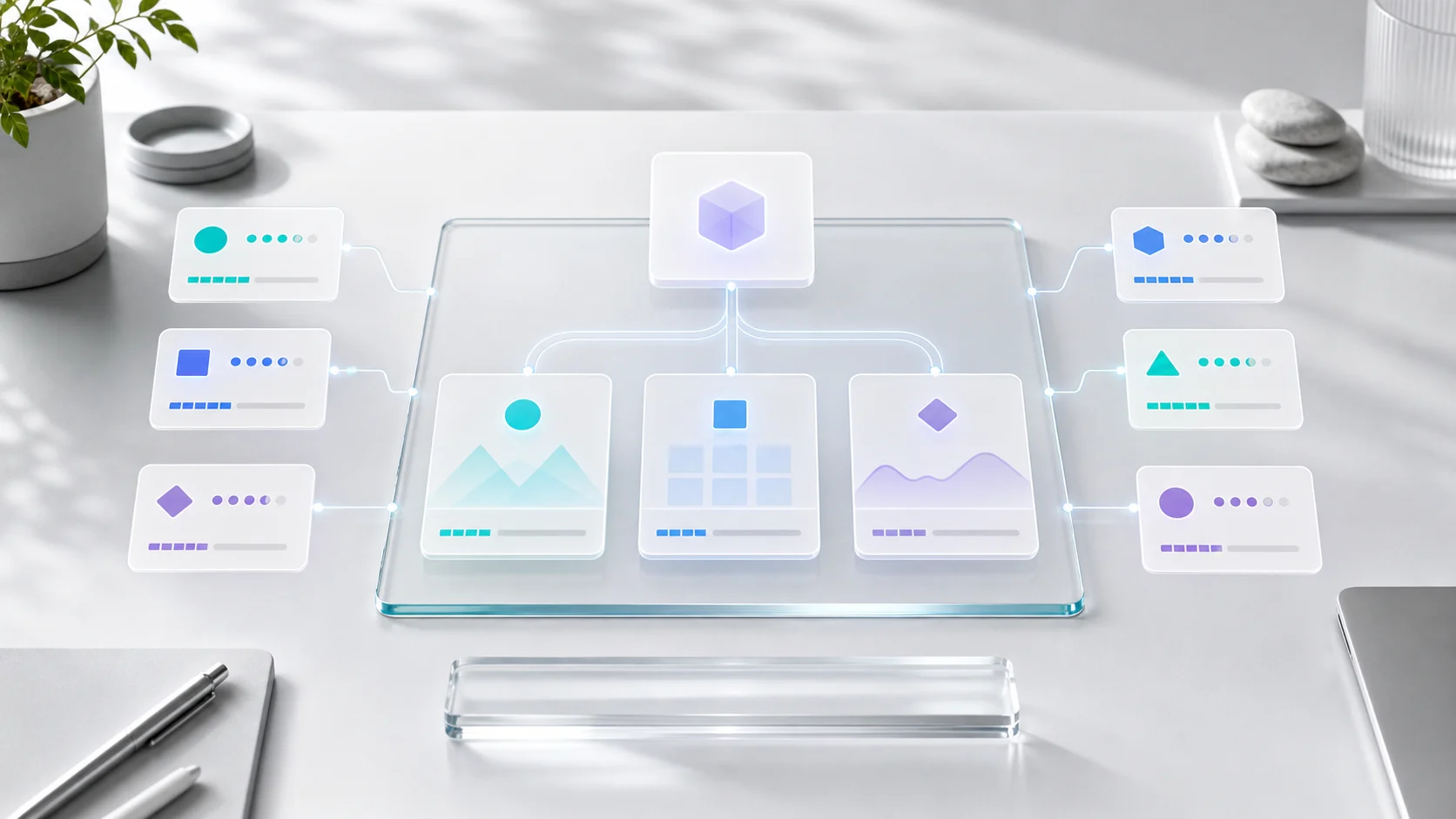
Do not force one model to do every step. Most serious agents should use routing.
Start with this baseline:
| Workflow step | Strong default | Cost-aware alternative |
|---|---|---|
| Clarify the job and design the workflow | Claude Fable 5 | GPT-5.6 Sol for simpler jobs |
| Execute scoped coding tasks | GPT-5.6 Sol | DeepSeek V4 for lower-risk edits after testing |
| Handle high-volume conversation turns | DeepSeek V4 | A smaller model tier if acceptance holds |
| Produce visual frontend work | Kimi K3 | GPT-5.6 Sol for ordinary UI tasks |
| Review high-impact output | Claude Fable 5 or Claude Opus 4.8 | Human review for irreversible actions |
Then measure task outcomes, not only model outputs.
Track:
- completion rate;
- human correction time;
- failed tool calls;
- average turns;
- token cost;
- latency;
- safety escalations;
- user-visible quality.
If a cheaper model completes the task with the same acceptance rate, use it. If a stronger model reduces rework, it may be cheaper in total even when the per-token price is higher.
Turn the model choice into an agent draft
Model selection becomes easier when the task is concrete. Instead of choosing a model in the abstract, write the job you want the agent to complete, then inspect the workflow, tools, approval points, and expected output.
On WWW Agents, you can start from a real outcome such as "review support tickets every Monday and summarize recurring issues" or "inspect a codebase and prepare an implementation plan." The draft helps you see whether the task needs a stronger planning model, a cheaper routine model, or a visual/code-specialized model.
Use the draft as a decision artifact before you commit to a model route.
How to test before production

Create a small evaluation set from real tasks. Ten cases are enough to expose many bad assumptions.
Include:
- three normal successful tasks;
- two hard but valid tasks;
- two tasks with missing or conflicting context;
- one task where a tool fails;
- one task the agent should refuse or escalate;
- one long-context session with a topic change.
Run every model through the same harness. Do not change the prompt for each model unless the production system would actually do that. Score the final result and the path:
- Did the model choose the right tool?
- Did it inspect tool results?
- Did it preserve instructions?
- Did it surface uncertainty?
- Did it stop at the right time?
- Did it ask for approval before consequential actions?
- Did the result meet the acceptance criteria?
Artificial Analysis maintains coding-agent benchmarks that compare performance across agents, models, and execution settings, but you still need your own workload tests because your tools, data, instructions, and risk limits are different.
Short answer
If you are building an AI agent today, do not search for one universal best model. Start with a strong model for the first working version, then route by task.
Use Claude Fable 5 for hard product and architecture decisions. Use GPT-5.6 Sol for everyday coding execution. Use DeepSeek V4 when volume and cost matter. Use Kimi K3 for visual frontend and premium long-context flows. Test Qwen3.8-Max on long-horizon work before relying on it. Keep Claude Opus 4.8 as a stable maintenance and review option.
The best LLM for AI agents is not a fixed name. It is the model routing system that gets more accepted work done per dollar, with fewer hidden failures.
Start with one bounded task, create a private Agent draft on WWW Agents, and use the criteria in this guide to decide which model should handle planning, execution, review, and routine turns.
FAQ
What is the best LLM for AI agents?
There is no single best LLM for every AI agent. For high-difficulty work, start with the strongest model you can access, then route easier steps to cheaper models after evaluation. In this guide, Claude Fable 5 is the best fit for ambiguous product and architecture decisions, while GPT-5.6 Sol is the strongest everyday coding-agent default.
What is the best LLM for building AI agents?
Use a strong model such as Claude Fable 5 or GPT-5.6 Sol to build the first version, because early agent design benefits from planning, code editing, and review. After the prototype works, evaluate cheaper models for routine turns, classification, summarization, and low-risk tool use.
What is the best open or lower-cost model for AI agents?
DeepSeek V4 is a strong candidate for cost-sensitive agent products because it can handle many conversation, tool-use, and sub-agent orchestration tasks at lower operating cost. Kimi K3 is attractive for visual and long-context work, but token consumption should be measured carefully.
Should one AI agent use multiple models?
Often, yes. A production agent can use one model for planning, another for routine tool calls, another for code or visual work, and another for final review. The goal is not model variety for its own sake. The goal is accepted work at the right cost and risk level.
Is the best coding model also the best agent model?
Not always. Coding benchmarks help, but agents also need instruction stability, tool discipline, context management, failure recovery, and safe stopping behavior. A model that writes good code in one turn may still perform poorly as the controller of a long workflow.